Plant & Manufacturing
Connecting P&ID objects and control loops through to code calculations and safety permits.
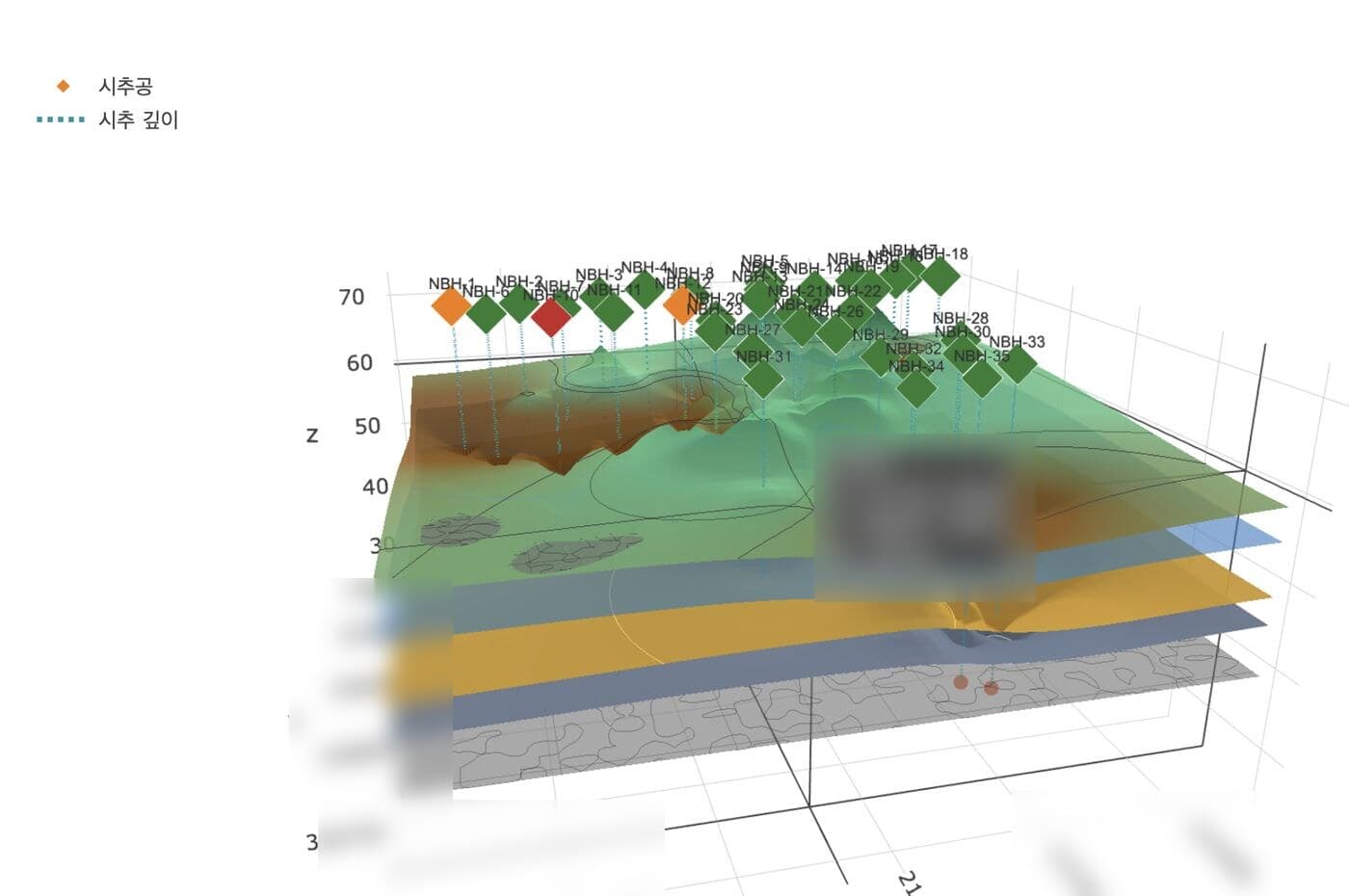
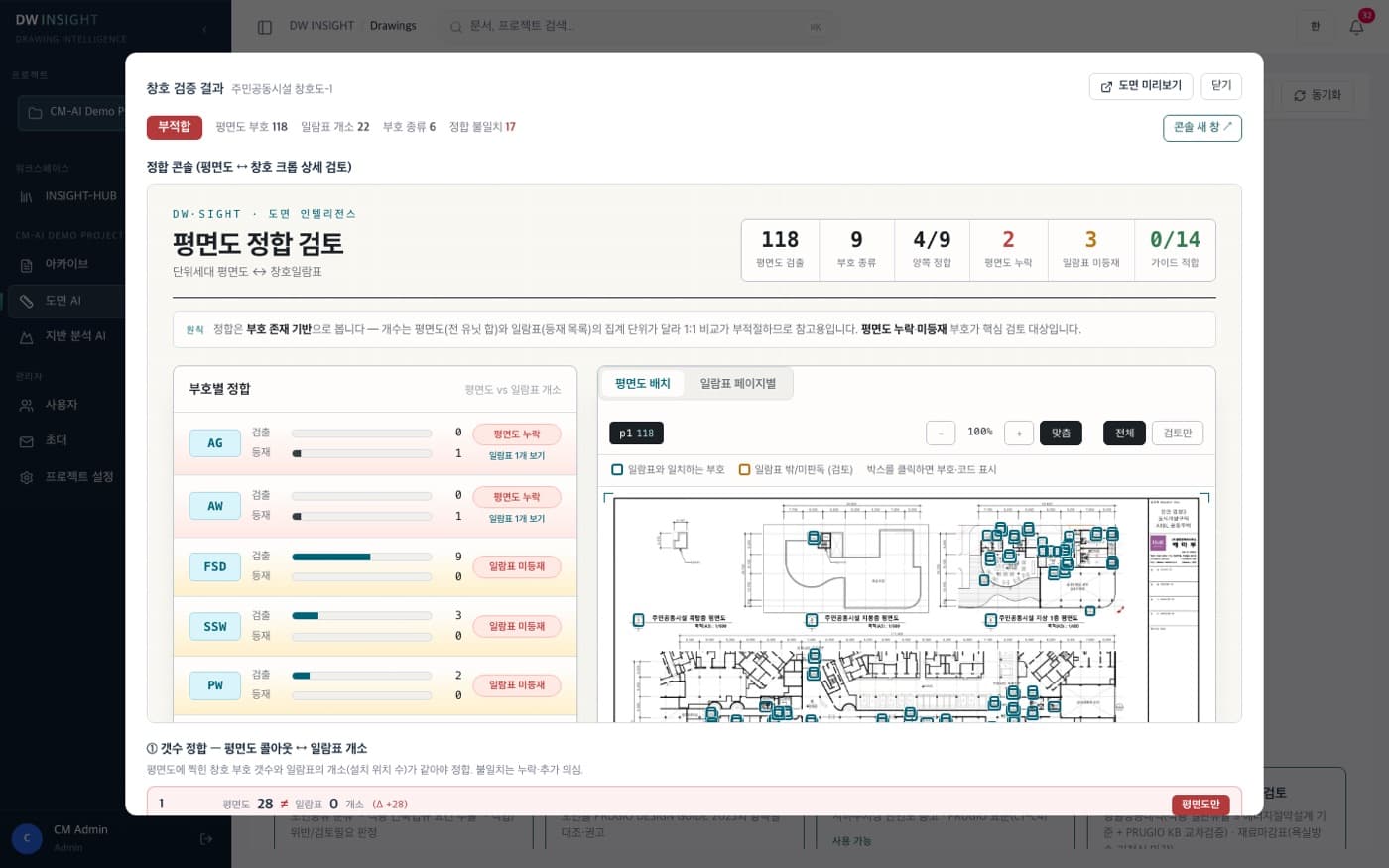
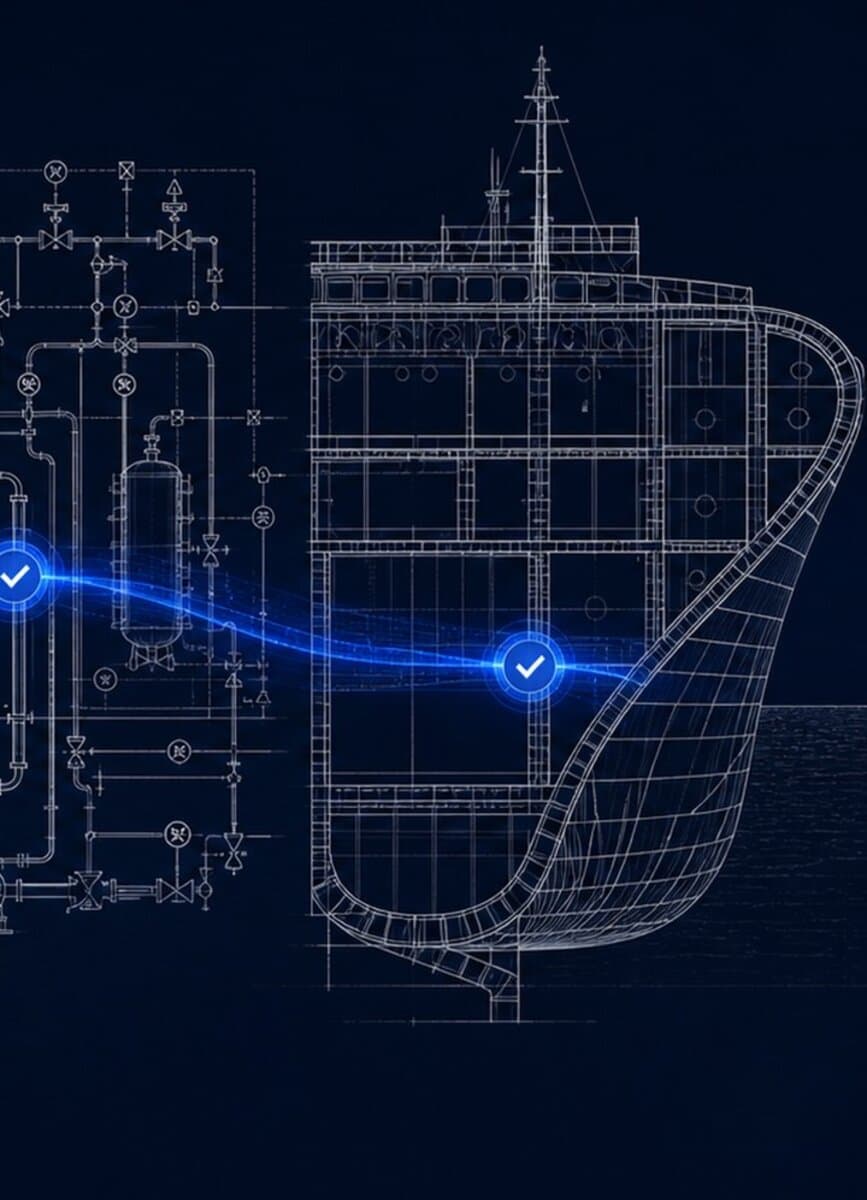
Background: real product screens and synthetic concept imagery — no customer-identifying information.
Pulling a single valve list out of hundreds of P&ID sheets still means retyping into a spreadsheet; pipe wall thickness is held inside spreadsheets that are decades old; and permit paperwork is repetitive typing that leaves no evidence behind.
Plant instrumentation and piping engineers · nuclear I&C V&V engineers on air-gapped networks · design calculation verification leads · site safety managers
The problems we solve in this industry
A drawing is only a drawing to the human eye
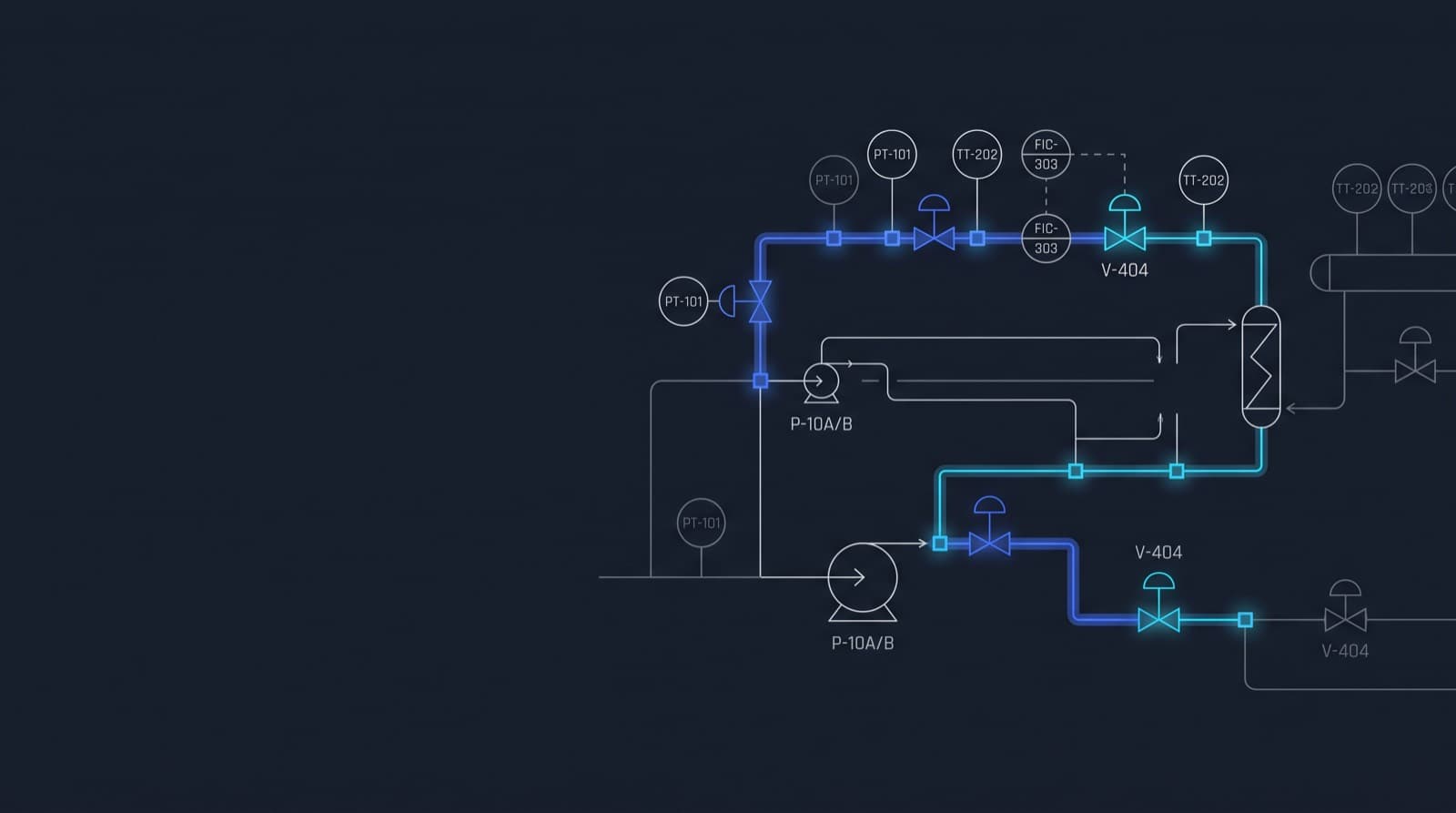
Pulling a single valve list out of hundreds of P&ID sheets still means retyping into a spreadsheet, and nobody can guarantee that what was typed matches the drawing. In many drawings the text has been frozen into curves — it cannot even be copied.
Deterministic first — we read the geometry and text of the vector PDF directly and decode tag grammar, symbol vocabulary and annotation conventions as explicit rules. AI is brought in only as a fallback on the last stretch determinism cannot reach, and every value carries its source coordinates and a confidence level so a person can check and approve it on the drawing itself. A verdict we are not confident in is never passed silently.
Engineering depth and maturity →Core calculations are locked inside spreadsheets and rules of thumb
Decades-old Excel and VBA files hold the company's design calculations, yet nobody can audit whether the formulas are right or who changed what and when. Mix design runs on rules of thumb and 28-day specimen waits; schedules run on personal experience and spreadsheets.
We recover the formulas at the file-binary level, turn them into a formalized authoritative source, and verify them by evaluating on two engines at once. Macros are never executed — they are replaced declaratively. The numbers are owned by the deterministic engine; the LLM only extracts and proposes. Any dimension we could not verify is labelled honestly as NOT_VERIFIED.
Engineering depth and maturity →Plenty of safety paperwork, no evidence left behind
Every job means retyping the same information into the risk assessment, the safe work procedure, the work permit and the toolbox meeting record; hazards and controls drift apart between those documents; and the evidence of approval, verification and corrective action is scattered, so past work can be neither reproduced nor audited.
We encode the permit-to-work system as a state machine and deterministic rules. Missing information and activation readiness are determined by the rule engine, while AI only proposes drafts carrying field-level sources and holds no approval authority. A submitted revision is sealed with a hash and every transition is written as an audit event, so a closed job can be reproduced without re-running the AI.
Engineering depth and maturity →Start with one set of your own plant & manufacturing documents
We run the technical verification demo on your real drawings and calculation sheets — see for yourself how evidence attaches to every verdict.