The five problems we solve.
Five bottlenecks spanning drawings, calculation, analysis, standards and safety. For each one: who lives with it, how we approach it, and the engineering knowledge that approach carries in its code — written down without inflation.

A drawing is only a drawing to the human eye
Pulling a single valve list out of hundreds of P&ID sheets still means retyping it into a spreadsheet — and nobody can guarantee that what was typed matches the drawing. In a large share of those drawings the text has been frozen into curves, so it cannot even be copied.
Plant instrumentation and piping engineers · nuclear I&C V&V staff working on air-gapped networks · engineers reviewing earth retaining designs · the people downstream who retype review markups by hand
Deterministic first. We read the geometry and the characters of a vector PDF directly, and decode tag grammar, symbol vocabularies and notation conventions as explicit rules. AI is brought in only as a fallback for the last stretch determinism cannot reach, and every value carries its source coordinates and a confidence score so a person can compare and approve it on the drawing itself. A judgment we are not confident in is never allowed to pass silently.
- ↳Exhaustive validity checking of instrument tag grammar (the ISA-5.1 family) and automatic grouping of control-loop role chains (sensor → indicator → controller → final control element) — 1,156 objects across a 25-page sample, F1 0.973 against the gold set
- ↳The symbol vocabulary of nuclear control logic diagrams (CLD) turned into a rule engine — an unlabelled rectangle is AND, an unlabelled circle is OR, and the presence or absence of a junction dot inverts connectivity entirely; even that convention is written down explicitly. Junction dots 147/147 on the golden fixtures
- ↳Elevation notation that varies from one design office to the next (EL.(+)82.50 vs. EL-0.01) and the arithmetic invariant of a ground anchor (free length + bond length + head allowance = total) used as an automatic cross-check — measured exhaustively across 75 PDFs from 12 live project sites
Maturity — Earth retaining extraction is a pilot, already measured against real submitted project files. P&ID metadata extraction and the CLD geometry engine are PoCs that have passed gold-set verification. Handwriting recognition is at the research stage, with quantitative evaluation complete.
Related proof — Earth retaining works — reading geotechnical investigation reports and drawings →
The same number differs from document to document
Whether the gross floor area in the design summary matches the total in the area schedule, whether the excavation level in the calculation sheet matches the elevation on the section — all of it is checked line by line, by eye and calculator, every time a revision lands. A single summation error in one table turns straight into permitting and contract risk.
Drawing reviewers at contractors and design offices · civil and structural design managers at construction firms · permitting staff reconciling review comments against the drawings
Summation, ratios and verdicts are performed only by deterministic decimal code; the LLM is not permitted to do arithmetic. An independent verification pass runs blind to the first conclusion, results are issued in exactly four states (VERIFIED / MISMATCH / NEEDS_REVIEW / NOT_APPLICABLE), and every value is traceable back to page, cell and coordinates. Click a number and the matching location on the drawing opens.
- ↳Separating total gross floor area from floor area used for the floor-area-ratio calculation, preventing double counting of subtotals and totals (RowRole), and confirming that accessible and EV parking are subsets of planned parking before they are added — a reviewer's tacit knowledge turned into a deterministic rule set
- ↳Rebar strength rules (400/500 MPa flagged as an error for D13 and below, 550/600 MPa conflicts detected for D16 and above) and a precision/recall gate of 1.0 against 130 golden labels in window and door schedules
- ↳The fail-closed contract — never turn UNKNOWN into PASS — enforced through CI gates and mutation testing
Maturity — Area consistency review is in live production. Window and door schedules, floor heights and review-comment matching are pilots on real drawings. None of our review engines is called released until it has passed its gold-set gate.
Related proof — Review comments matched 1:1 to the drawings →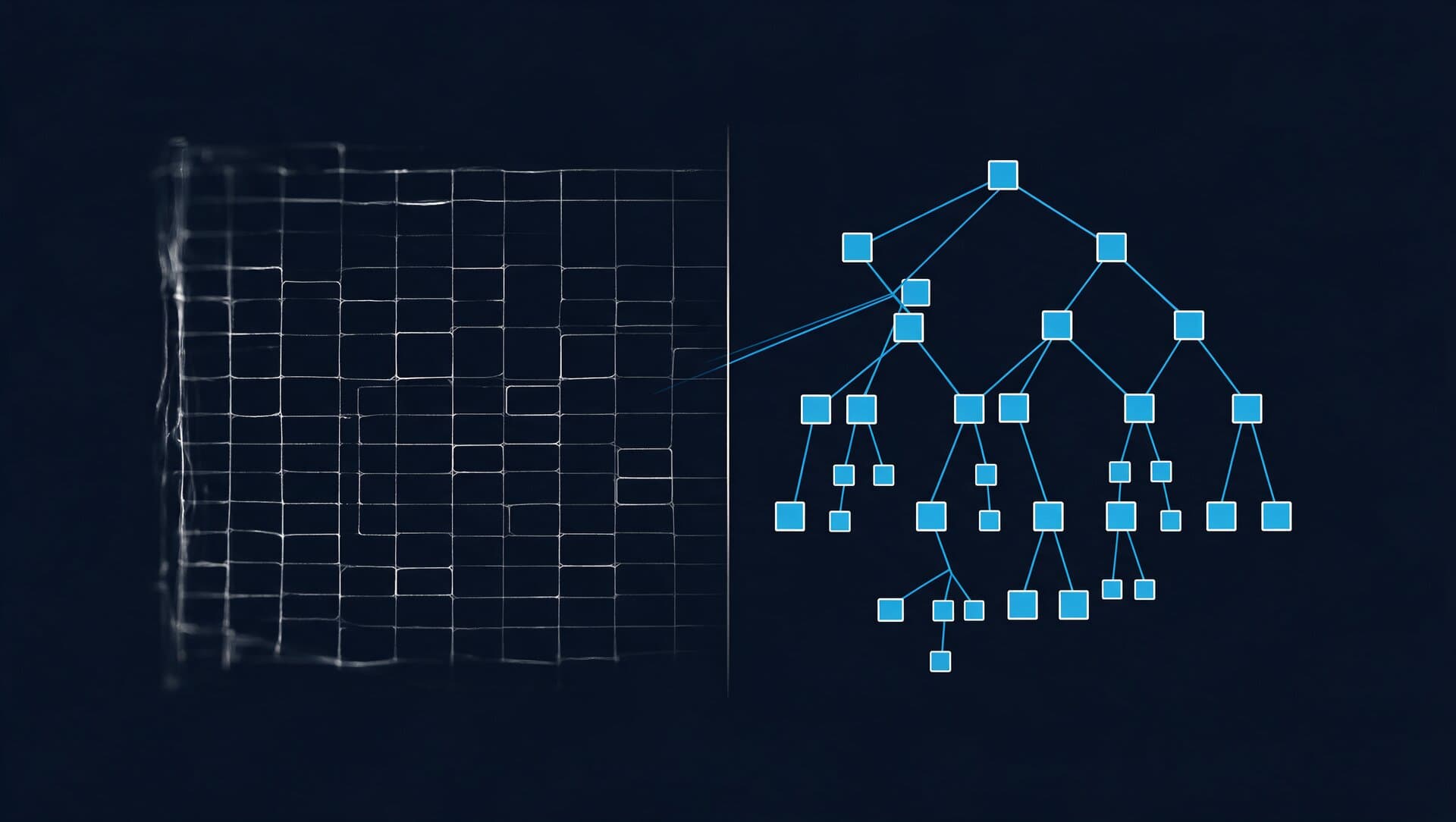
Core calculations are locked inside spreadsheets and rules of thumb
Decades-old Excel and VBA files hold a company's design calculations, and nobody can audit whether the formulas are right or who changed what and when. Mix design runs on rules of thumb and a 28-day wait for cylinder results; schedules run on individual experience and spreadsheets.
Design engineers and verification leads who calculate and approve through legacy calculation sheets · mix design specialists and site QC engineers · planning engineers who must justify the duration they submitted
We recover the formulas at the file-binary level into a formalized master, then verify them by evaluating with two independent engines at once. Macros are never executed — they are replaced with declarative equivalents. Numbers are owned by the deterministic engine; the LLM only extracts and proposes. Any dimension we have not verified is labelled NOT_VERIFIED, honestly.
- ↳Subsea pipeline wall-thickness criteria (API RP 1111) formalized across internal pressure, external pressure collapse and buckle propagation, with the Excel formulas recovered into an AST at binary (BIFF8) level — 185/185 formulas matching under independent evaluation
- ↳KS allowable limits for concrete mix design (slump, maximum water-binder ratio and unit binder content per strength grade) implemented as automatic verification code, and the mix itself formalized as a multi-objective optimization across strength, slump, carbon and cost
- ↳The national construction-duration guideline (Korean Ministry of Land, Infrastructure and Transport, 197 pages) rebuilt as a normalized knowledge base, with productivity decomposed by ground condition and blasting method — cross-site validation error converging from 33% to 0%
Maturity — The schedule engine is a commissioned-research pilot running a live demo. The mix design platform is a pilot. Excel calculation verification is an MVP that has completed technical validation.
The product for this problem — doAZ Method →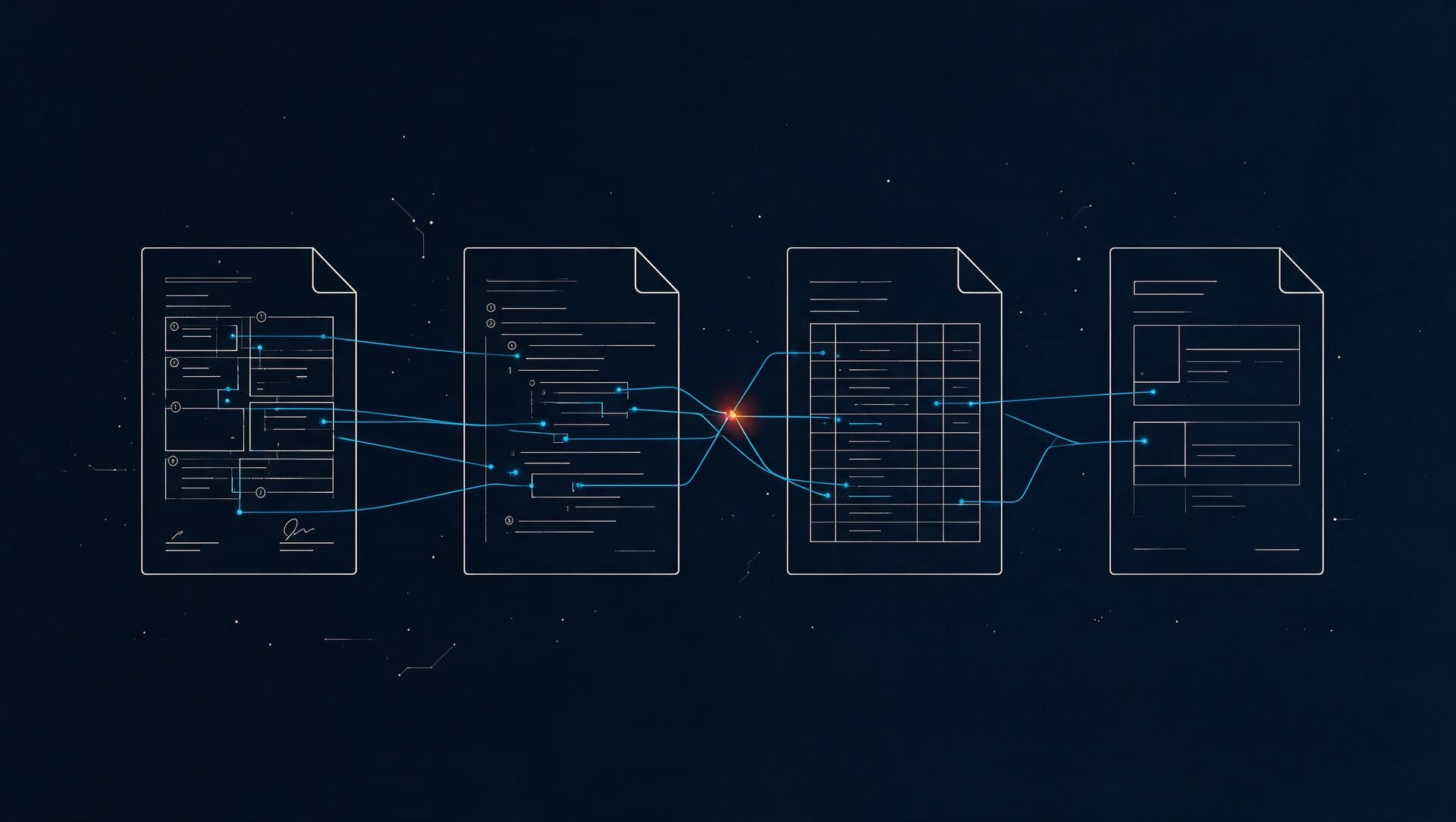
Plenty of safety paperwork, almost no evidence left behind
For every task the same information is retyped into the risk assessment, the safe work procedure, the work permit and the toolbox meeting record; hazards and controls drift out of alignment between those documents; and the evidence of approval, verification and corrective action ends up scattered, so a past job can be neither reproduced nor audited.
Site safety managers and the work permit approval chain · WSH Coordinators, Permit Issuers and site supervisors at contractors in Singapore
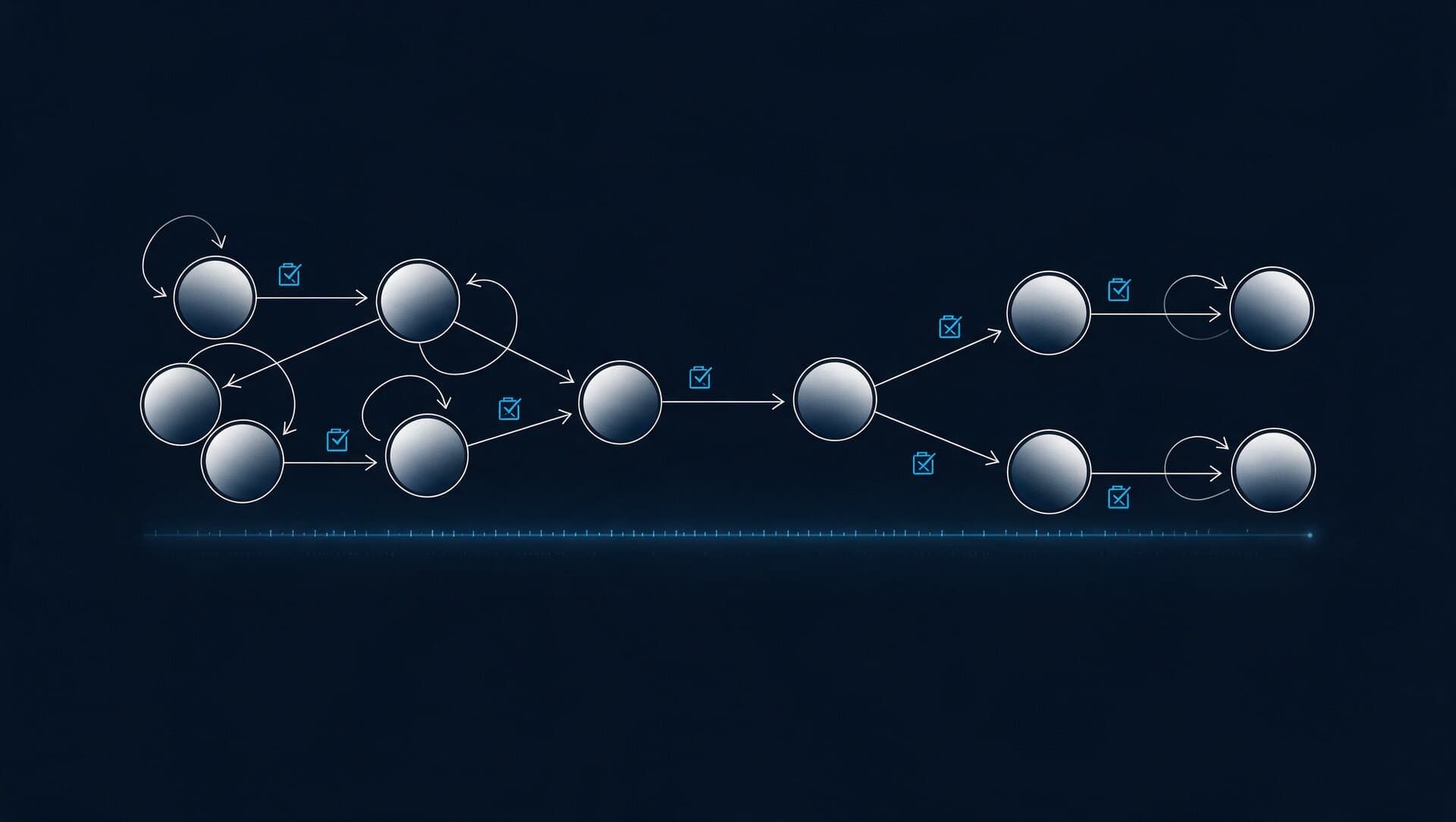
We encode the permit-to-work regime as a state machine and deterministic rules. Missing information and activation readiness are judged by the rule engine; AI only proposes drafts with field-level provenance and holds no approval authority. A submitted revision is sealed with a hash and every transition is recorded as an audit event, so a closed job can be reproduced without re-running any AI.
- ↳Singapore WSH separation of duties (the manager is never the safety approver) plus deterministic rule sets for hot work and work at height — fire watch assignment, post-work fire watch duration and anchorage point identification are all decided by rule
- ↳Even print quality is managed as a product rule: when an A4 permit form would fall below the minimum scale ratio, it is split across two pages rather than forced onto one — a readability floor
Maturity — The Korean safe work permit SaaS is in production. The Singapore platform has completed M0–M3 with 124 API tests, and sits at the stage before pilot hardening.
Figures above are measured against internal gold sets and live data. We never publish a number without its conditions.
Breadth is confirmed in code, not in a proposal
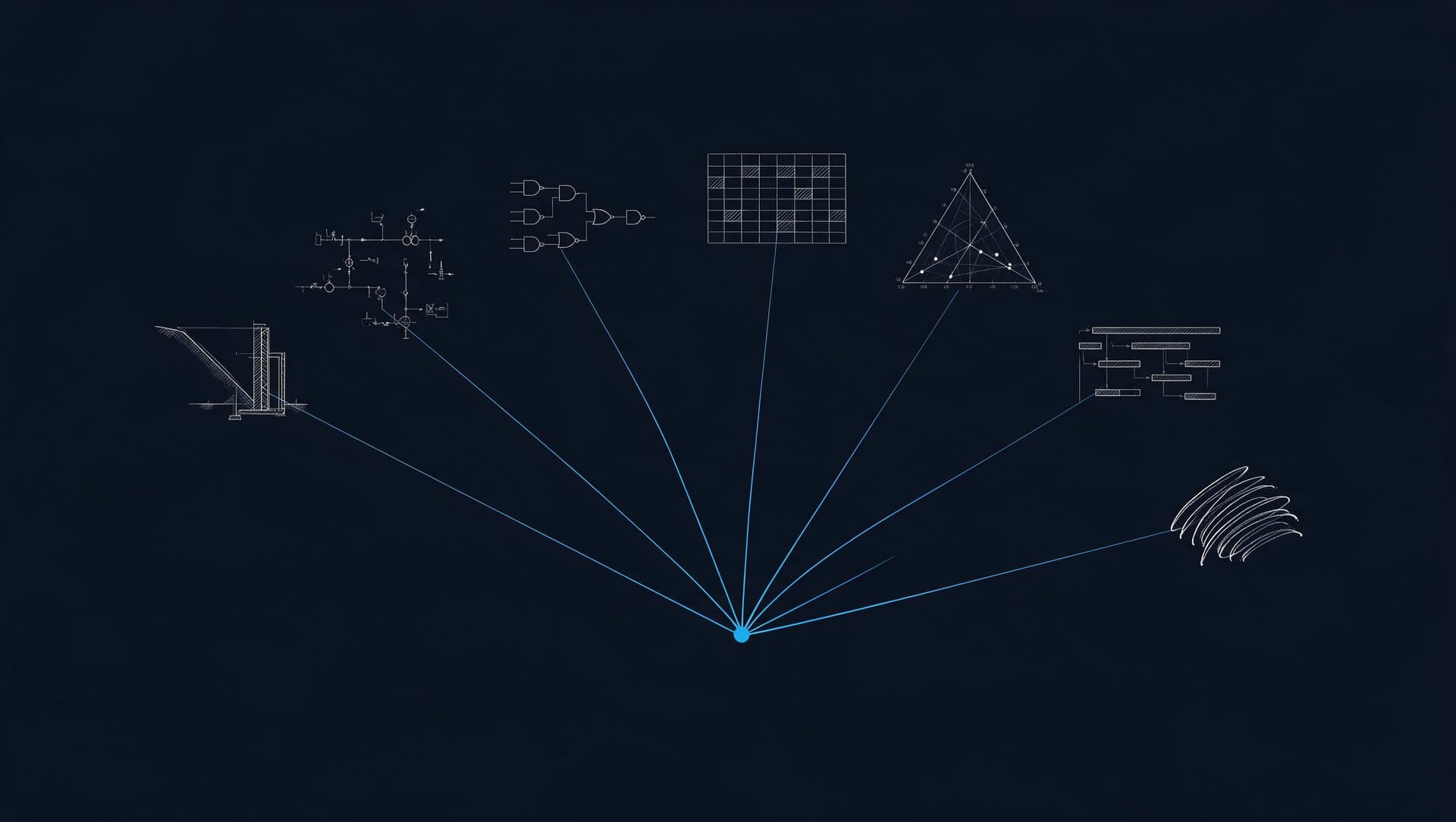
doAZ's breadth is confirmed in code, not in a proposal. In drawings, we read earth retaining works, P&ID, nuclear control logic diagrams and apartment drawing sets with deterministic geometry and rules — measured exhaustively across 75 PDFs from 12 live project sites, plus a separate corpus of 148 PDFs and 29,157 pages. In calculation, we recovered 185 legacy Excel formulas at binary level and confirmed a full match under independent evaluation. In analysis, mix design was formalized as multi-objective optimization and schedule productivity was decomposed by condition strata, converging cross-site validation error from 33% to 0%. In standards and codes, Subcontracting Act clauses and KS criteria are mapped directly into the detection and verification logic. In safety, our work permit SaaS runs in production. Some of this is production, some is pilot, and some is PoC — we do not hide which is which.
Meet them as products
Some of the problems above can be met as named products. We publish only confirmed public product names — capabilities whose naming is not yet final are introduced above as problem axes.
Connects internal knowledge, drawings and documents through verification-first RAG. Every answer is forced to carry its source location and citation, and when the evidence is weak the system warns you first.
Talk to us →Cross-verifies geotechnical design documents against field instrumentation and predicts displacement. From validating borehole adequacy to 3D stratum modelling — explainable AI that puts numbers behind every judgment.
Talk to us →Enterprise knowledge management and engineering document AI. Unified search across statutes, court precedents and 888 sections of KDS (Korean Design Standards), with the AI verifying the strength of the evidence behind its own answer.
Talk to us →P&ID and CLD as one drawing intelligence stack — the KKS tag is the join key
P&ID intelligence (objects, connectivity, control loops) and nuclear CLD intelligence (control logic time constants) are not two separate PoCs — they are one plant drawing intelligence stack. The KKS tagis the key that joins the two drawing types: we read the drawing (L1) and then verify it (L2 — simulation self-verification and P&ID↔CLD consistency checking). Deterministic first, provenance attached, Zero Silent Error, a 100% open-source stack, and readiness for air-gapped and on-premise deployment are the differentiators both share.
Whichever problem it is, we will verify it on your own documents
One set of drawings and calculation sheets is enough. See for yourself how every verdict arrives with its evidence attached.