
Industrial Knowledge
to Actionable AI.
Machines read drawings, borehole reports, and calculations, and turn them into judgments with the evidence linked and the standard verified.
Floor-plan window marks ↔ window schedule, fully cross-checked
- Detected on plans
- 118
- Absent from schedule
- 3
- Missing from plans
- 2
Evidence original plan coordinates · per-mark crop attached
Rule window-schedule matching rule · version-pinned
Approval pending reviewer — the AI does not approve
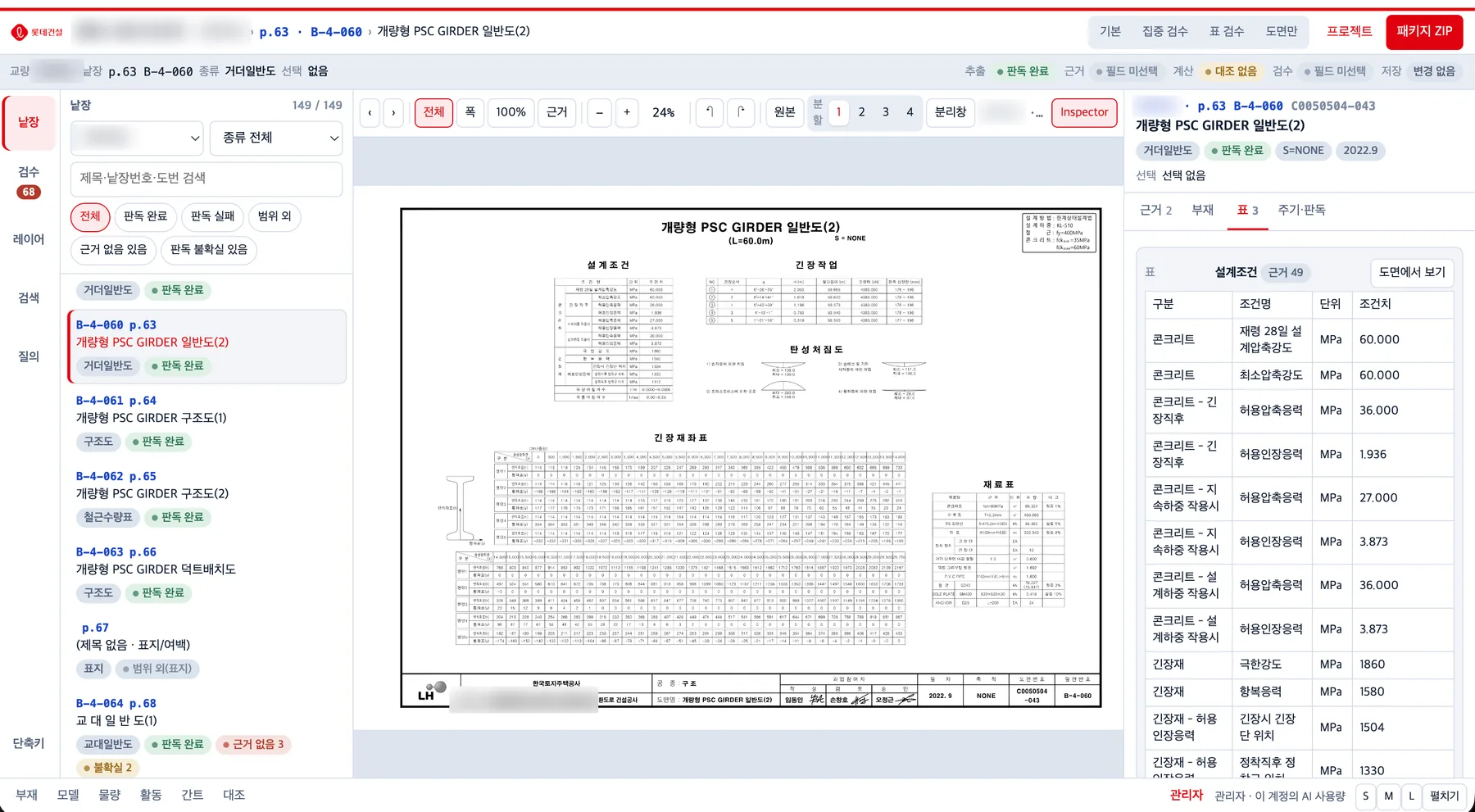
This mirrors an actual verdict screen. How sampling became full coverage — see the case study
The bottleneck in engineering is review.
doAZ produces not a plausible answer, but a result linked to its evidence.
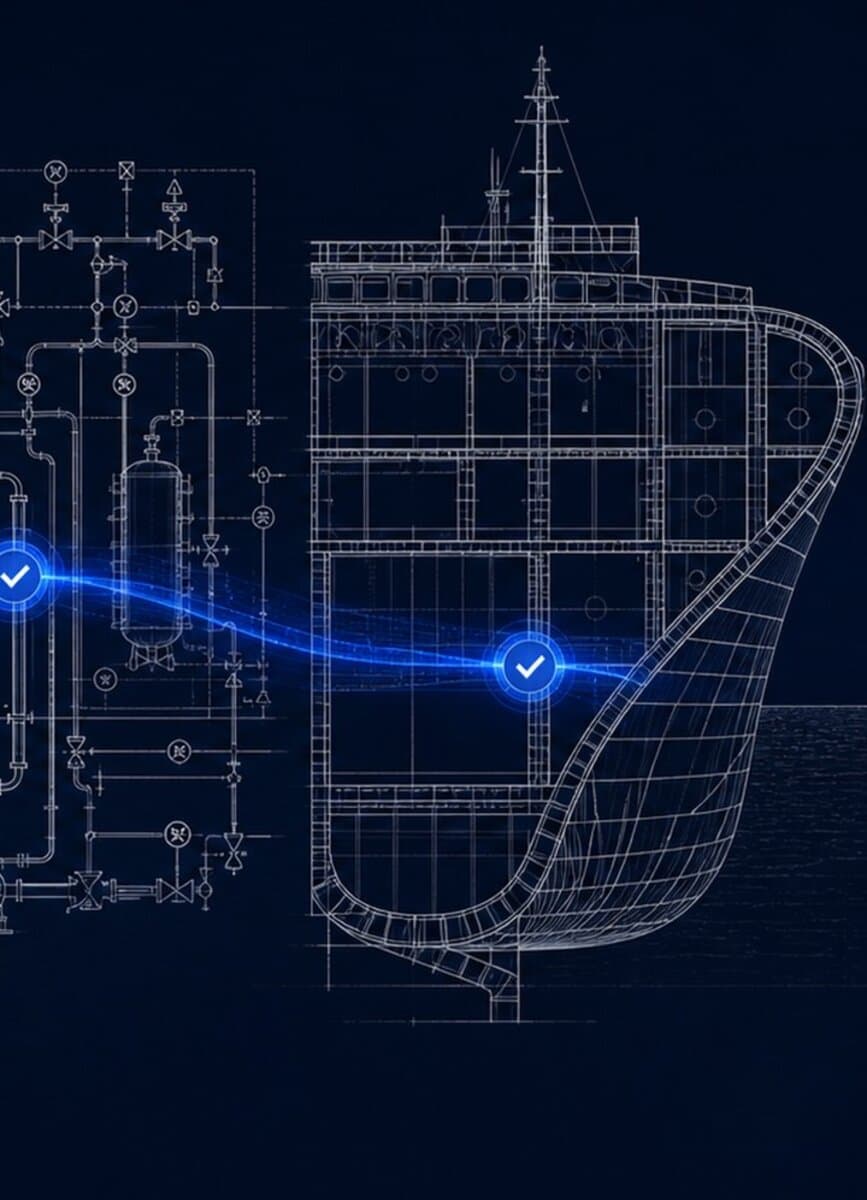
Machines read drawings and documents, and cross-check consistency across them.
Every judgment carries its source coordinate, clause, and confidence.
Official calculation runs on a version-pinned deterministic engine — the LLM never does the math.
When evidence is weak, the AI abstains first and hands off to a person.
Designed for on-premise and air-gapped deployment.
Industrial Knowledge to Actionable AI. Understand. Compile. Verify. Operate.
“Can’t you just use general-purpose AI for that?”
It’s the question we hear the most. General-purpose AI produces plausible answers. In engineering review, plausible is not the same as correct — and a wrong basis only surfaces after the audit or the incident.
- ✕Callout tracing — cannot follow detail references from one drawing to another
- ✕Cross-reference resolution — relationships that span multiple sheets
- ✕Symbol variants — notation conventions that differ from office to office
- ✕Leader-to-object binding — identifying exactly what a leader line points at
- ✕Revision comparison — tracing how an R2→R3 change ripples through the set
Above all — it doesn’t say so, even when it’s wrong.
- ✓Every verdict carries its original drawing coordinates — click it and jump straight to that location
- ✓States the governing standard and clause, showing the applied value next to the standard value
- ✓Official calculation runs on a version-pinned deterministic engine — the LLM never does the math
- ✓Learns office-specific notation conventions to absorb symbol variants
- ✓Tracks changes across revisions and shows their ripple range
And — when evidence is weak, it abstains first and hands the item to a person.
An AI-native engineering verification stack.
The doAZ Engine unifies an AI reasoning layer and an engineering precision layer into one structure — not AI bolted onto existing tools, but a platform designed around verification from the ground up.
Understands the industrial meaning of documents, drawings, tables, and calculations. It extracts, proposes mappings, and retrieves evidence to explain its reasoning — a domain-adaptive structure that even learns office-specific notation conventions.
Official calculations run on a version-pinned deterministic engine. Units, standards, tolerances, tests, and approval history are managed as a single executable unit.
Within contract scope
Product principle · stated in contract
In production
Product boundary
Deployed where complexity is highest and the cost of a missed review is greatest.

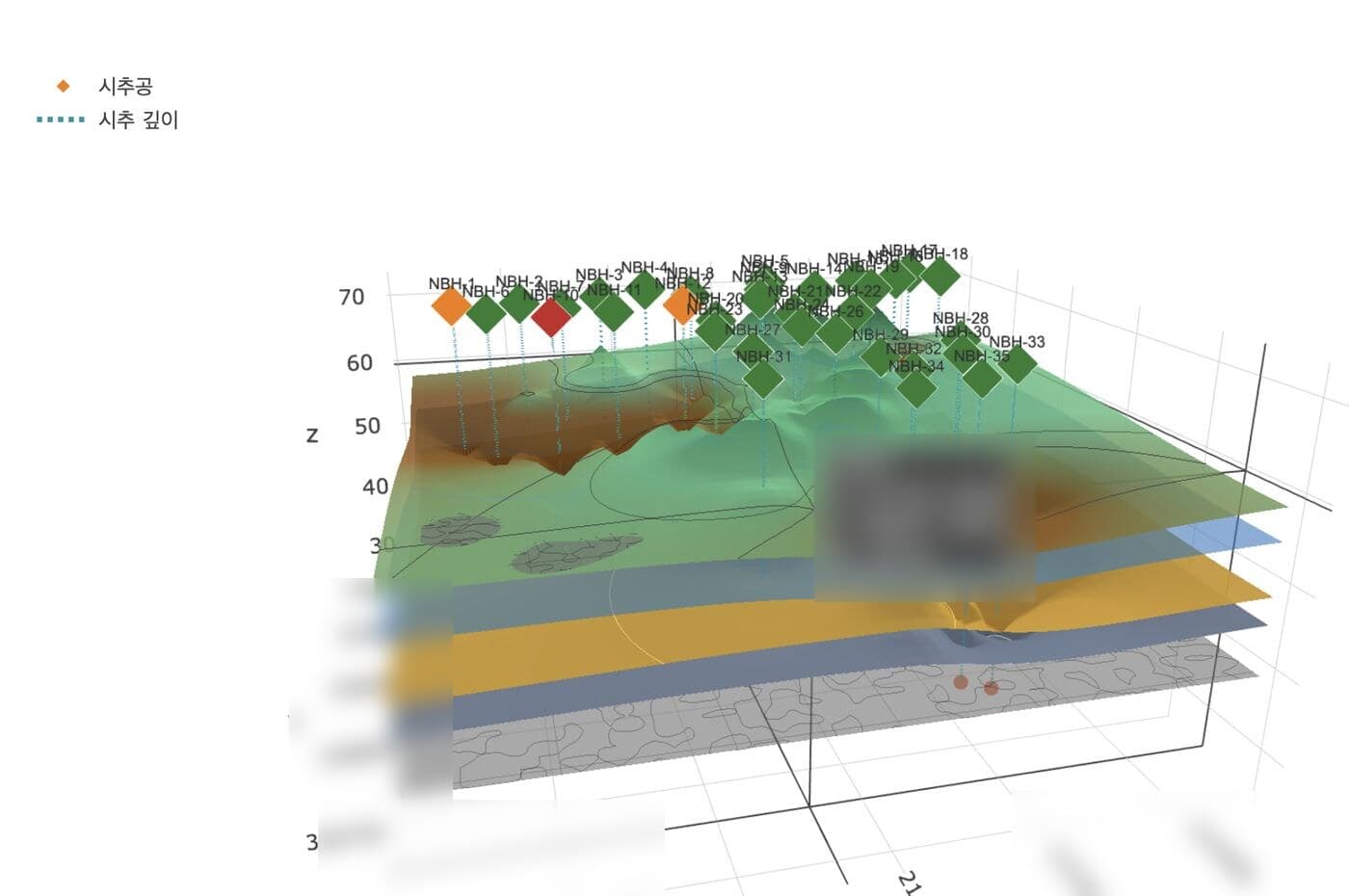
Boreholes → 3D strata · design-ready judgment

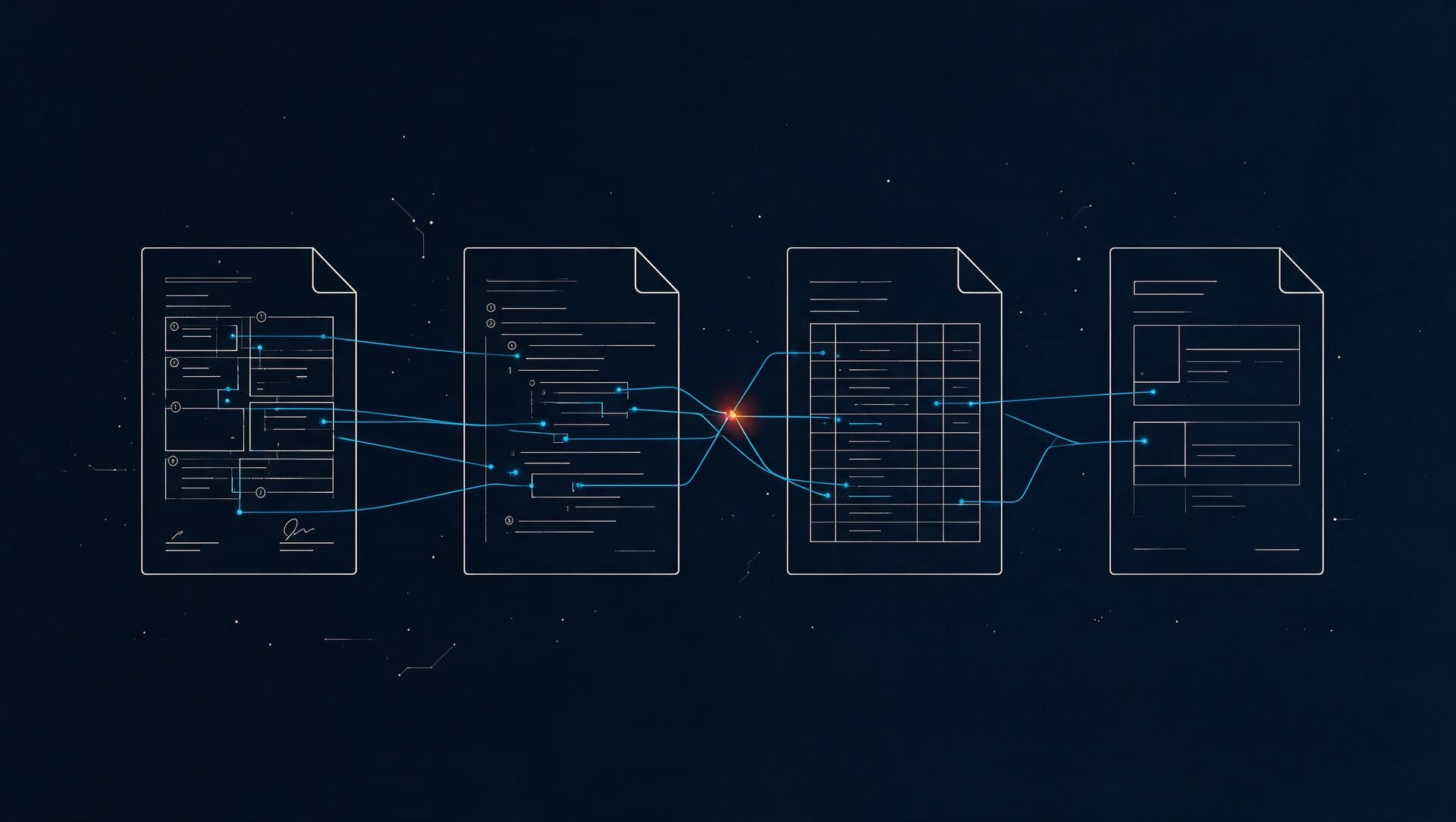
Drawing ↔ schedule ↔ review comments, cross-checked

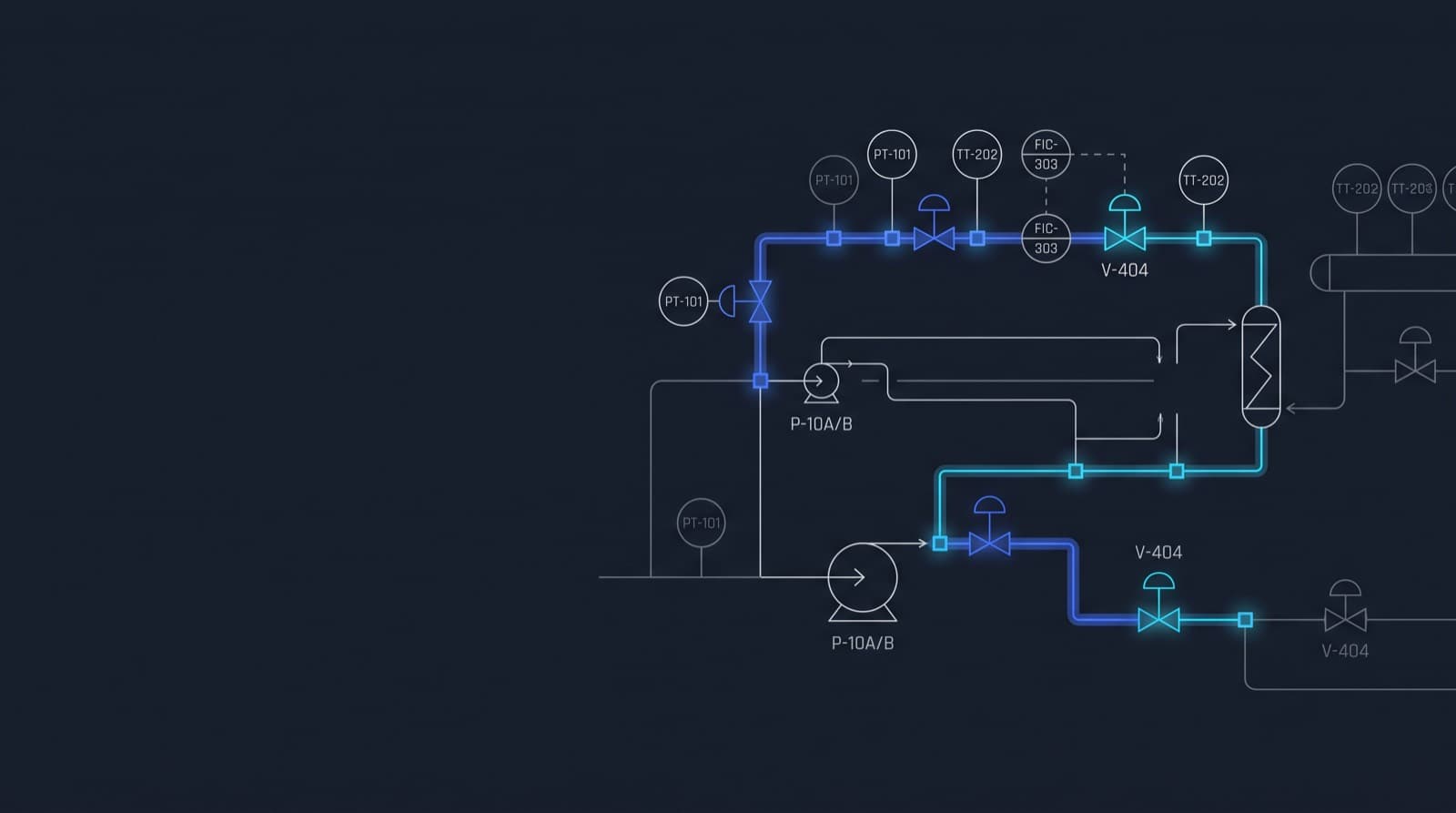
P&ID · specs · standards, reconciled

Standards · calculations, structured
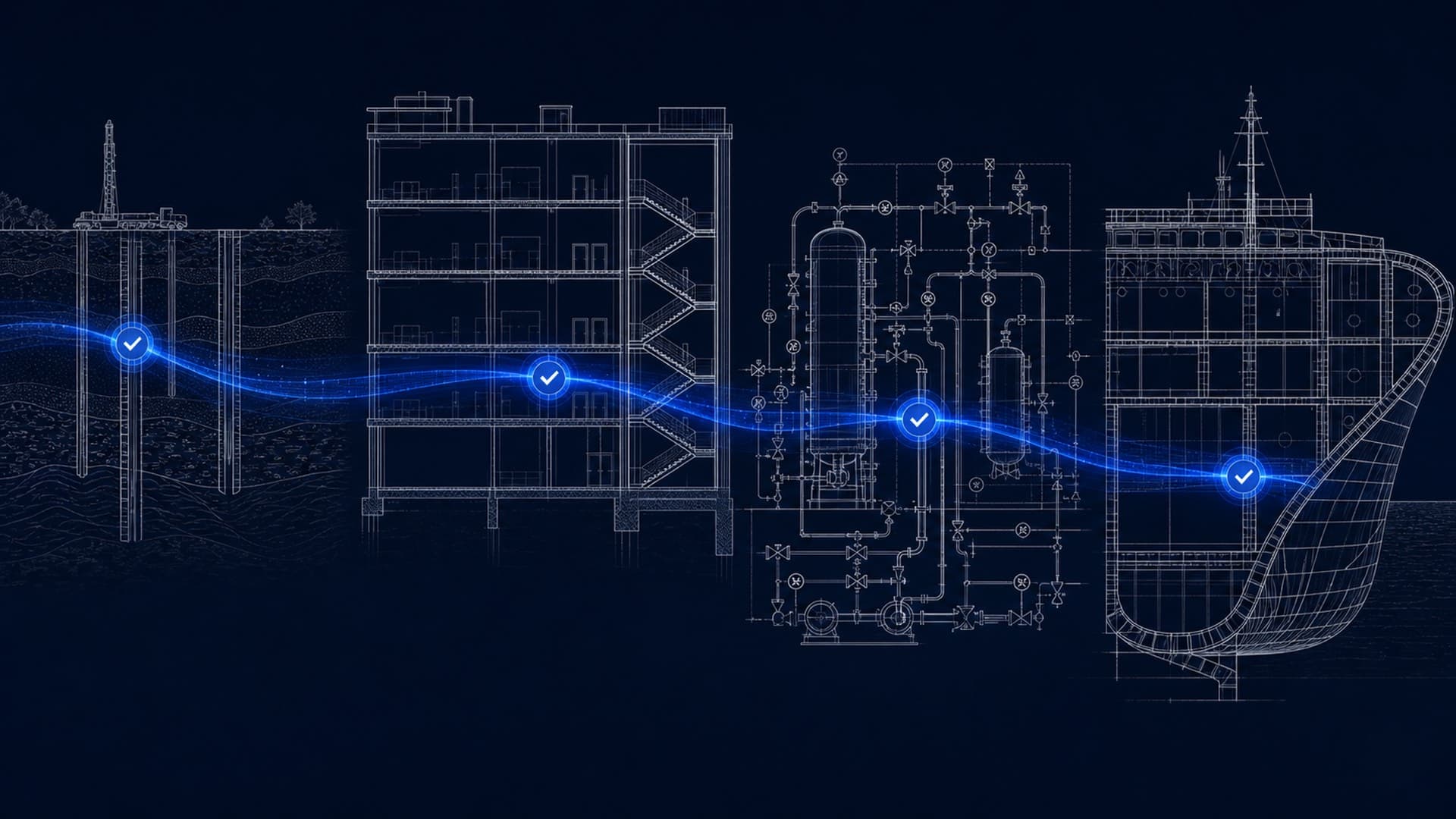
Real product screens and synthetic concept art — not customer-identifying data.
Not claims — verifiable numbers.
Geotechnical review — where drawings meet reality
POSCO E&C · joint commercialization
basis: POSCO E&C frozen gold set
case detail →Every review comment linked to its drawing
Daewoo E&C
basis: 13/13 items on a live project
case detail →Every answer carries document, page, and quote
Lotte E&C · KT Estate · Seoul Fire Dept.
basis: measured per each customer environment
case detail →11 repeat & expansion orders · zero outbound sales — grown entirely through inbound and re-orders across 16 enterprise customers.
We talk in problems,
not products.
One verification engine solves five problems — we publish the approach and the engineering knowledge built into the code for each one.
P&ID, nuclear CLDs, and shoring plans — read with deterministic geometry and rules
Area schedule ↔ design summary ↔ door/window schedule, fully cross-checked — traced back to coordinates
Formulas recovered at the binary level and independently re-verified — into an auditable calculation
Cross-references across contract, spec, and bill of quantities, each attached to its clause
Permit-to-work encoded as a state machine — every transition is an audit event
Start with your own engineering documents.
One set of real drawings or calculations is enough. See evidence attach to every judgment — on-premise or air-gapped if you need it.
Not ready to talk yet — 2-minute Readiness Self-check →