Between Drawings and Excel
The same problems recur on shipyards, construction sites, and plant floors. This series works through them in a different language. 10 essays on connecting the calculation knowledge already inside Excel to drawings, models, standards, and change history — instead of eliminating Excel.

Excel is not the problem.
Disconnected data is.
The core knowledge of an industry does not live in a single drawing or a single BIM model. Formulas sit in Excel, assumptions in reports, geometry in CAD and BIM, and status in ERP and site records.
This series is not an argument for replacing everything with a bigger piece of software. It proposes a realistic Engineering Data Backbone that leaves each source system responsible for what it owns, while connecting objects, provenance, calculations, standards, changes, and approvals.
Where does the data that designs a ship actually live?
How weight, compartments, equipment, stability, estimates, and production status connect to existing Excel calculation sheets through a central ship data model.

Why shipyards still run on Excel
Excel is not an outdated tool. It is the container for decades of accumulated ship design knowledge.
Read · 11 min →
Enter ship data once, and let it flow into every calculation sheet
A practical structure for connecting a central ship data model to existing Excel calculation sheets.
Read · 12 min →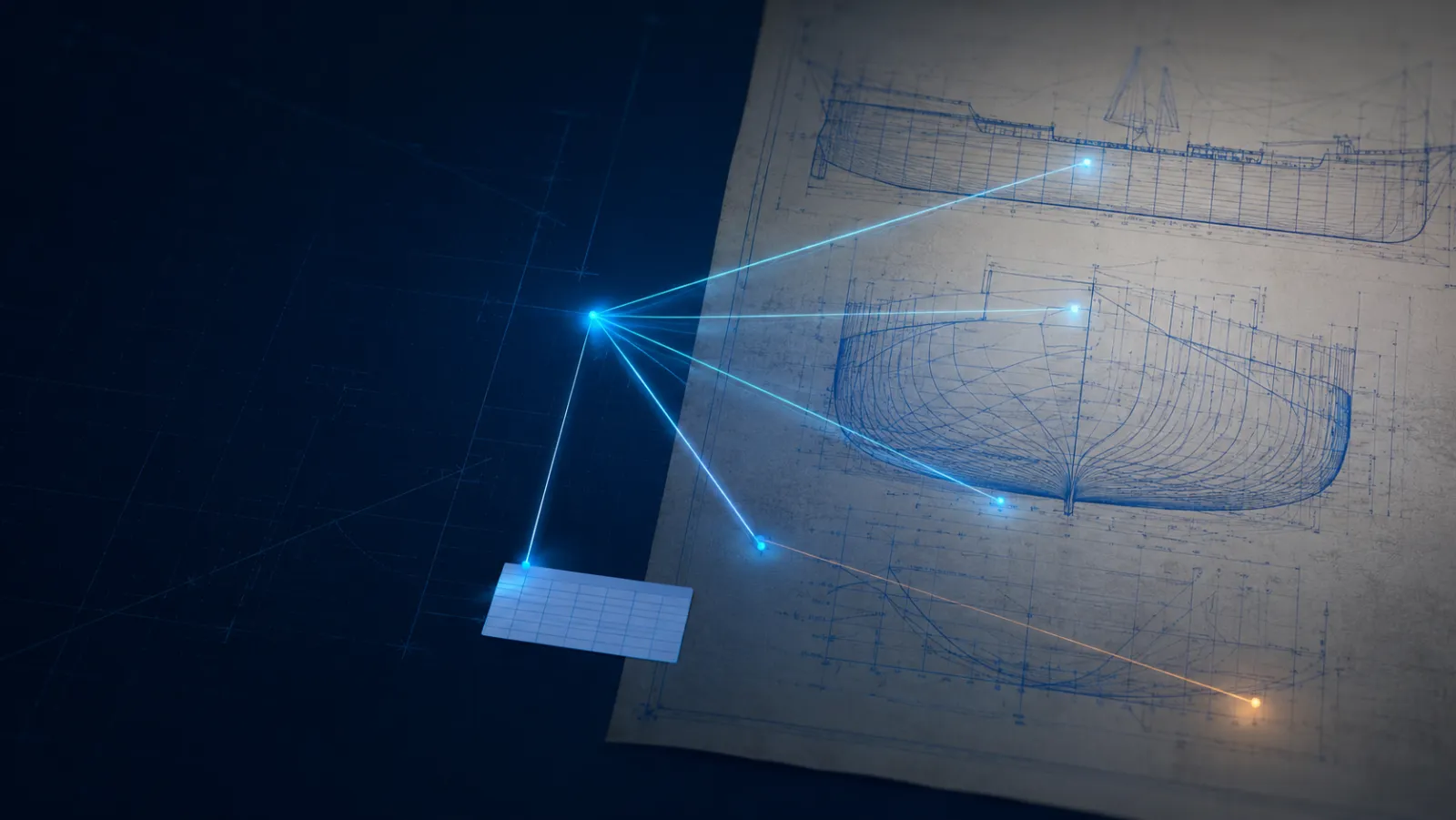
AI does not design the ship for you
A verifiable Ship Engineering Copilot that links the evidence behind every calculation and traces the impact of design changes.
Read · 12 min →The construction data gaps that BIM did not close
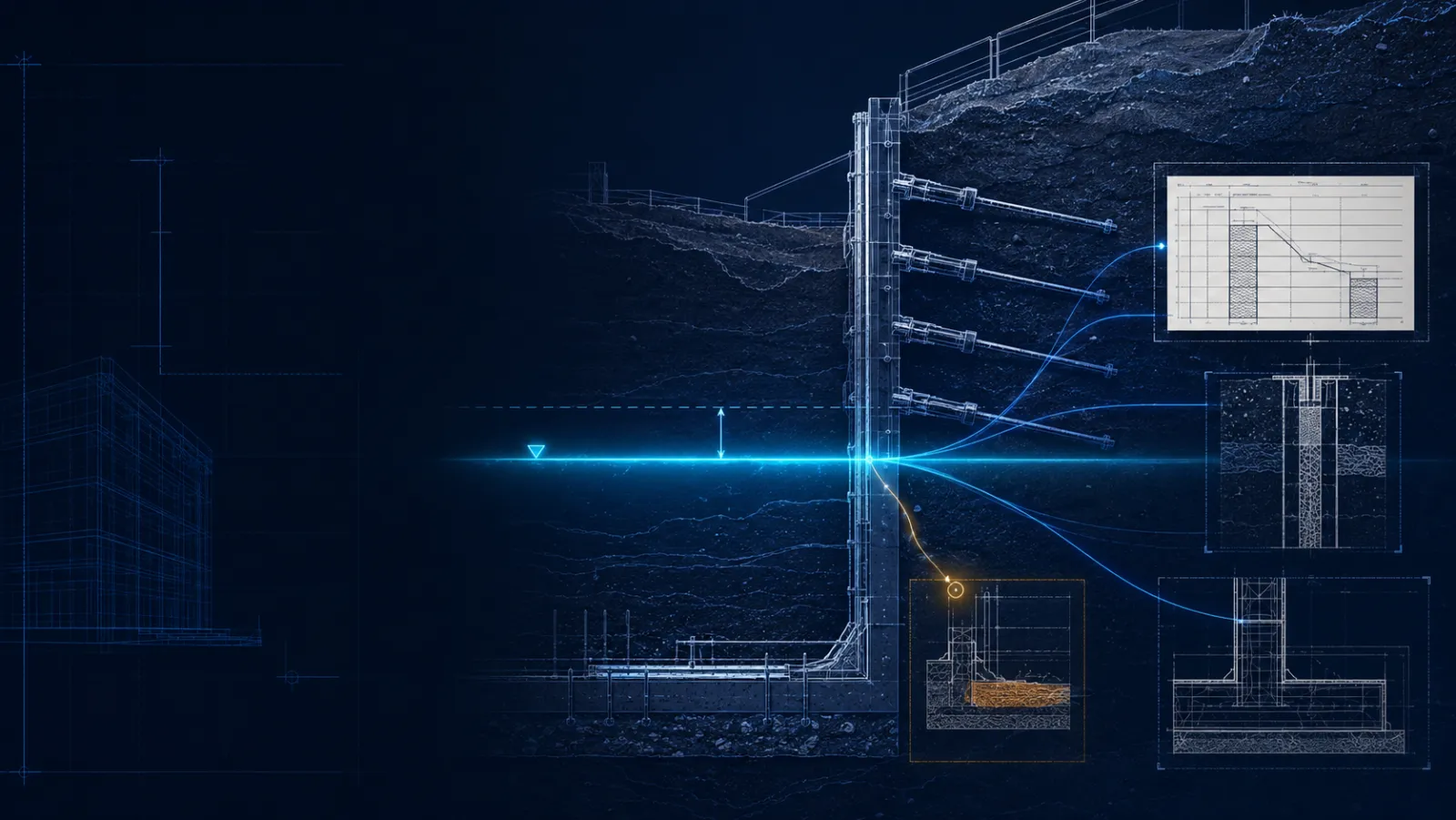
Connecting geotechnical, structural, steelwork, finishes, and interiors through a shared kernel and Domain Packs, and tracing the impact of design changes all the way into cost and schedule.
BIM alone does not solve the construction data problem
Why drawings, analysis models, Excel calculation sheets, and site data each tell a different truth.
Read · 12 min →
Can geotechnical, structural, steelwork, and finishes share one data philosophy?
The disciplines differ, but the principles for governing objects, calculations, standards, and changes are the same.
Read · 13 min →
How far does a single design change travel?
Engineering Change Intelligence: tracing a drawing change through quantities, cost, schedule, and approval.
Read · 13 min →One continuous flow from P&ID to the fabrication floor
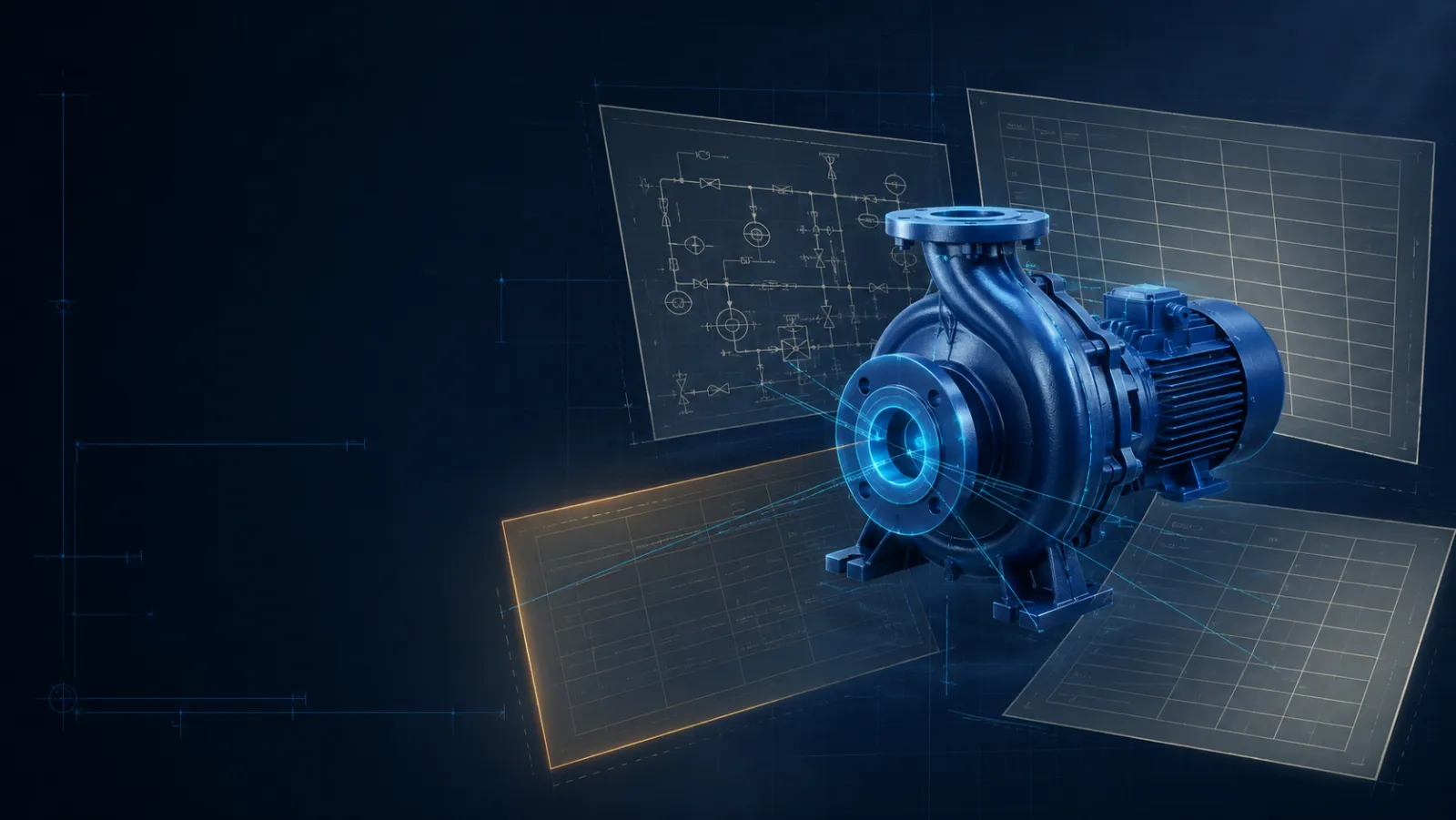
A structure that connects tags, specifications, procurement, fabrication, and inspection into a Digital Thread, and governs AI-driven changes through patches, verification, and approval.
When the P&ID and the equipment list tell different truths
The greatest risk on a heavy industry project is not missing data. It is data that does not agree.
Read · 12 min →
How a Digital Thread is actually built in plant engineering
How to connect tags, specifications, calculations, procurement, and fabrication data into a single network of relationships.
Read · 13 min →
In heavy industry, AI is won on controlled change, not automatic generation
The design principles of Controlled Change: safely automating drawing edits, calculation revisions, and the approval process.
Read · 13 min →